
Quick Answer: Good kitchen cabinets have a well-built box with tight joints, sturdy drawers that slide smoothly, secure hinges, supported shelves, a firmly attached back panel, an even finish and a clear written warranty. Check all nine points, then confirm the materials and hardware in your quote.
Cabinets can look great from the outside, but the details tell you more. Open the doors, pull out a drawer and look inside. That’s how to tell if kitchen cabinets are good quality without relying only on a price tag or a salesperson’s description.
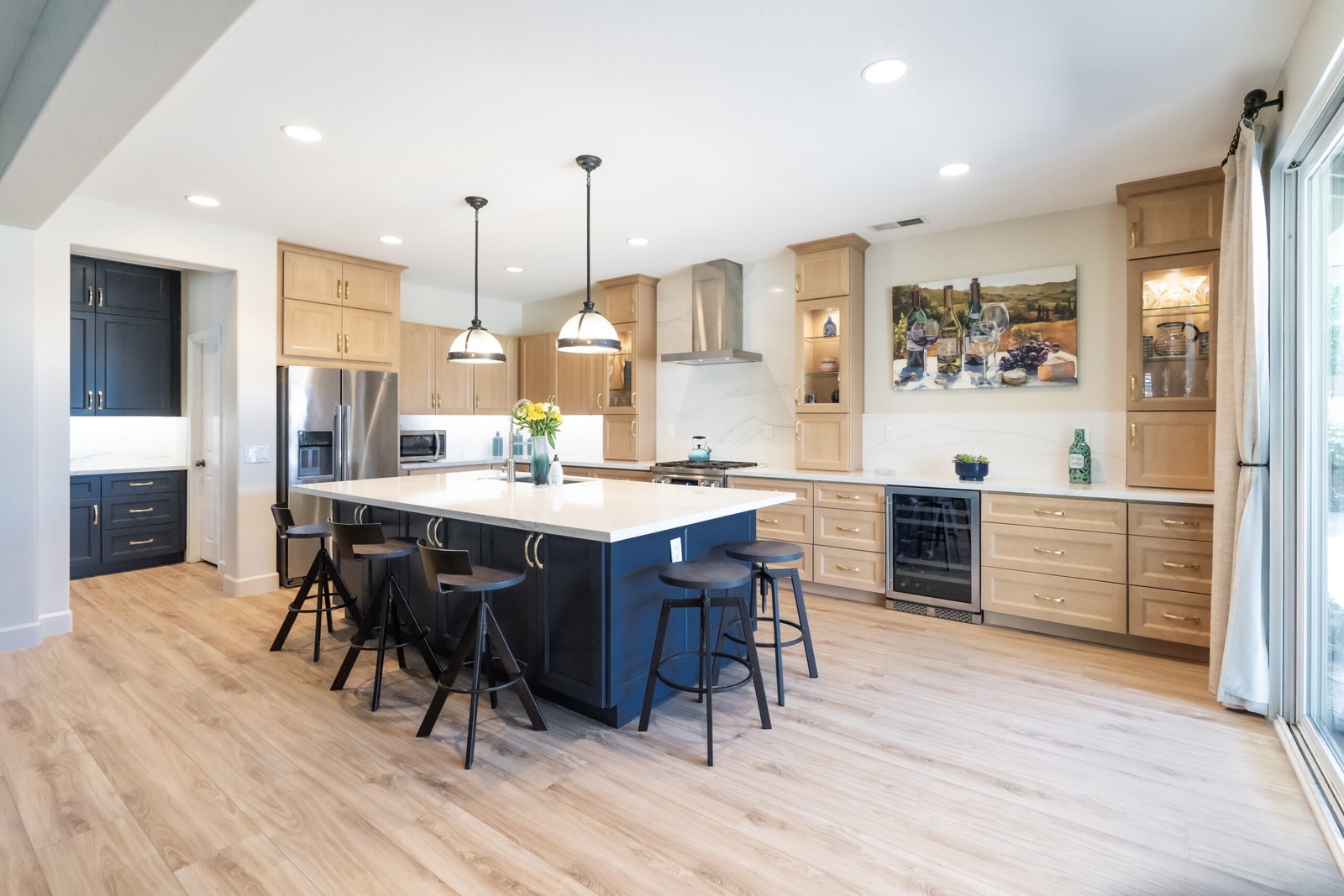
Use this cabinet quality checklist at our San Marcos showroom or any cabinet store in North County San Diego. It explains what to inspect and what questions to ask. A showroom check is useful, but it does not replace the manufacturer’s written specifications or performance tests.
Inspect the Cabinet Box, Joinery and Back Panel
Start with the box, the cabinet’s main body behind its doors and drawer fronts. If possible, ask to see an open sample or cutaway so you can inspect the construction instead of guessing what’s behind the finish.
1. Identify the box material and construction
Find out what the sides, top and bottom are made from. Have the salesperson point out each material and explain the panel thicknesses. The material used for a cabinet door does not necessarily tell you how the box is built.
Our solid wood kitchen cabinets page is a good starting point, but check the specifications for your chosen line. Don’t assume that every part has the same construction because the collection has a wood name. Confirm that the display matches the cabinets in your quote, including exposed end panels.
2. Look at how the pieces join
Look at accessible corners and seams for gaps, loose connections or damaged edges. Find out how the panels are joined and secured. Check more than the front of the cabinet, where trim may hide the joints.
You don’t need to know every joinery method. Focus on whether the parts fit together neatly and whether the salesperson can explain the assembly. If something shifts or looks uneven, ask if it’s a display issue or part of the product’s construction.
3. Check the back panel and mounting details
Check the cabinet back panel thickness, how the panel is attached and where the installer will fasten the cabinet to the wall. Ask whether separate mounting rails are used, since the back panel and mounting system may be different parts.
Thickness alone won’t tell you how securely a cabinet mounts. Request the installation instructions and have your installer review the complete system. Don’t pull on a mounted showroom cabinet to test its strength; the goal is to understand the construction, not perform your own load test.
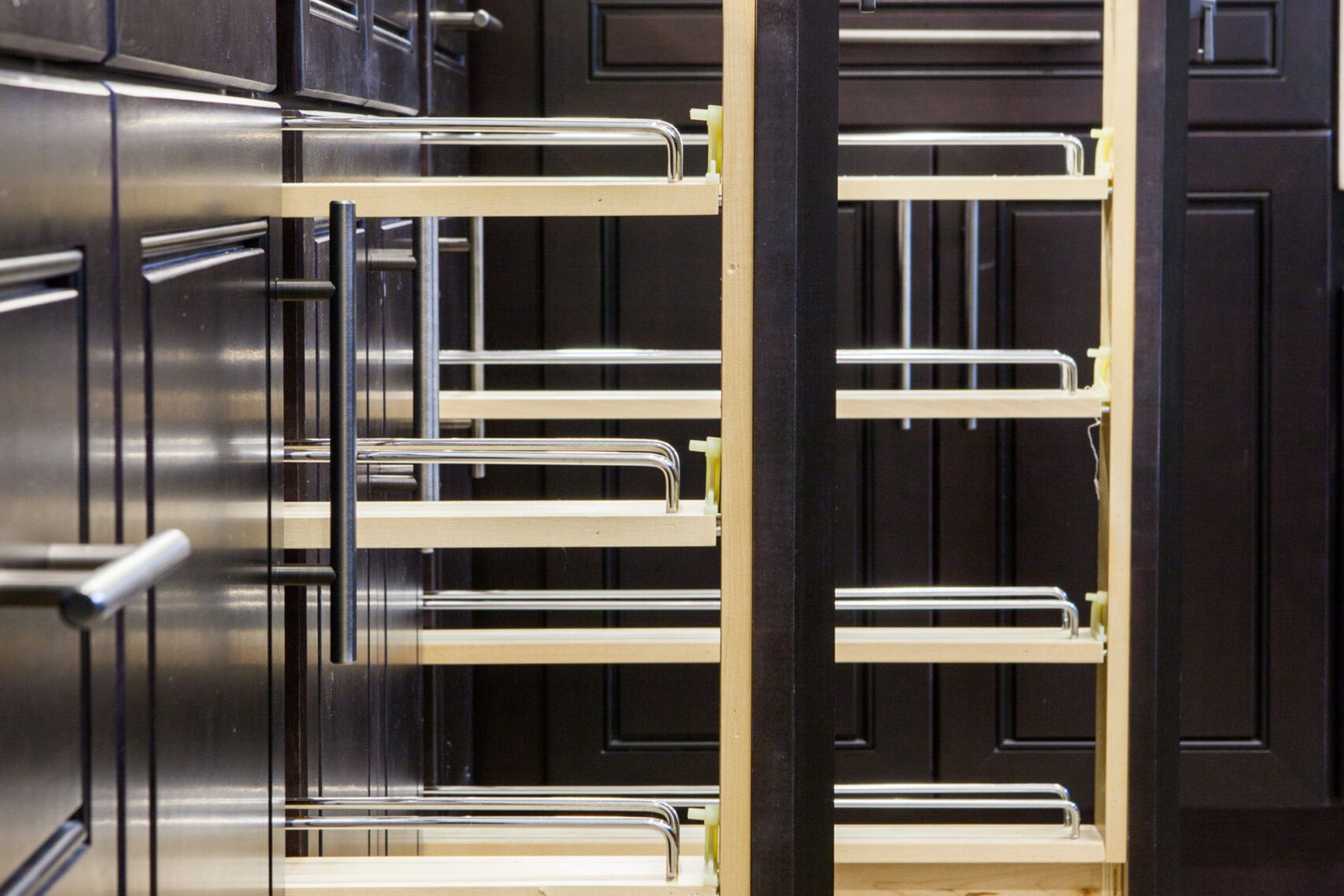
Check Drawer Boxes, Slides and Hinges
Open and close several doors and drawers, not just the smallest display. These are the parts you’ll use every day. Confirm which features come standard and which cost extra.
4. Inspect the drawer box and its joints
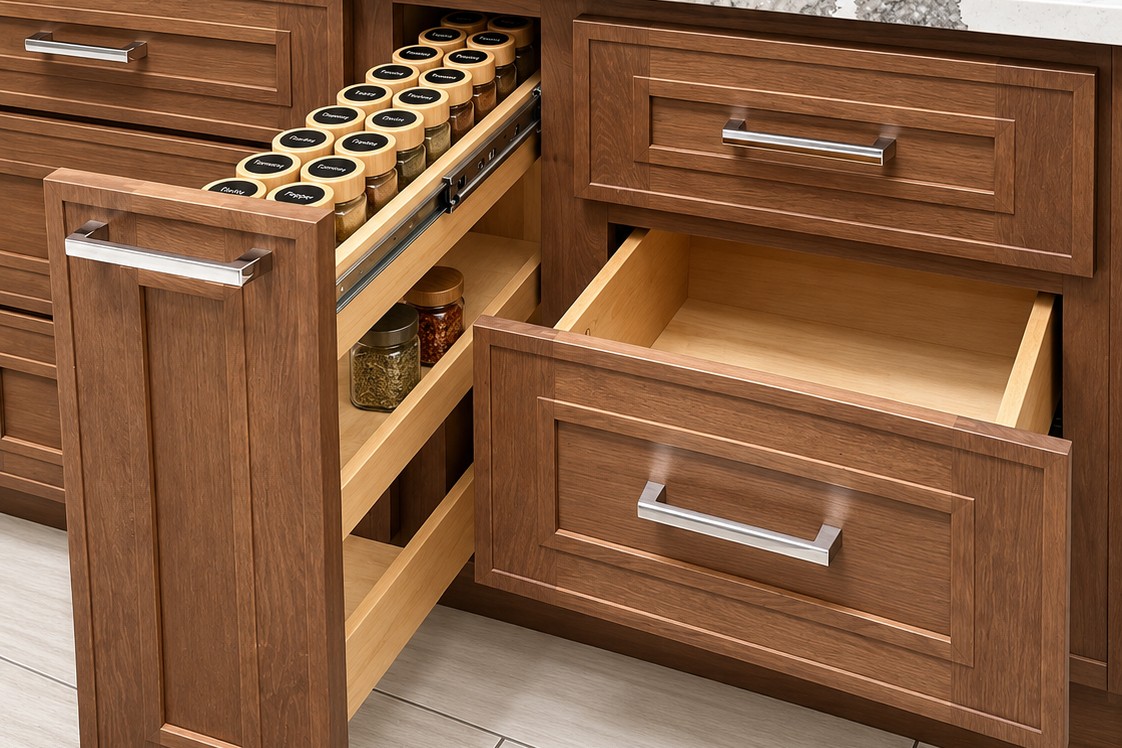
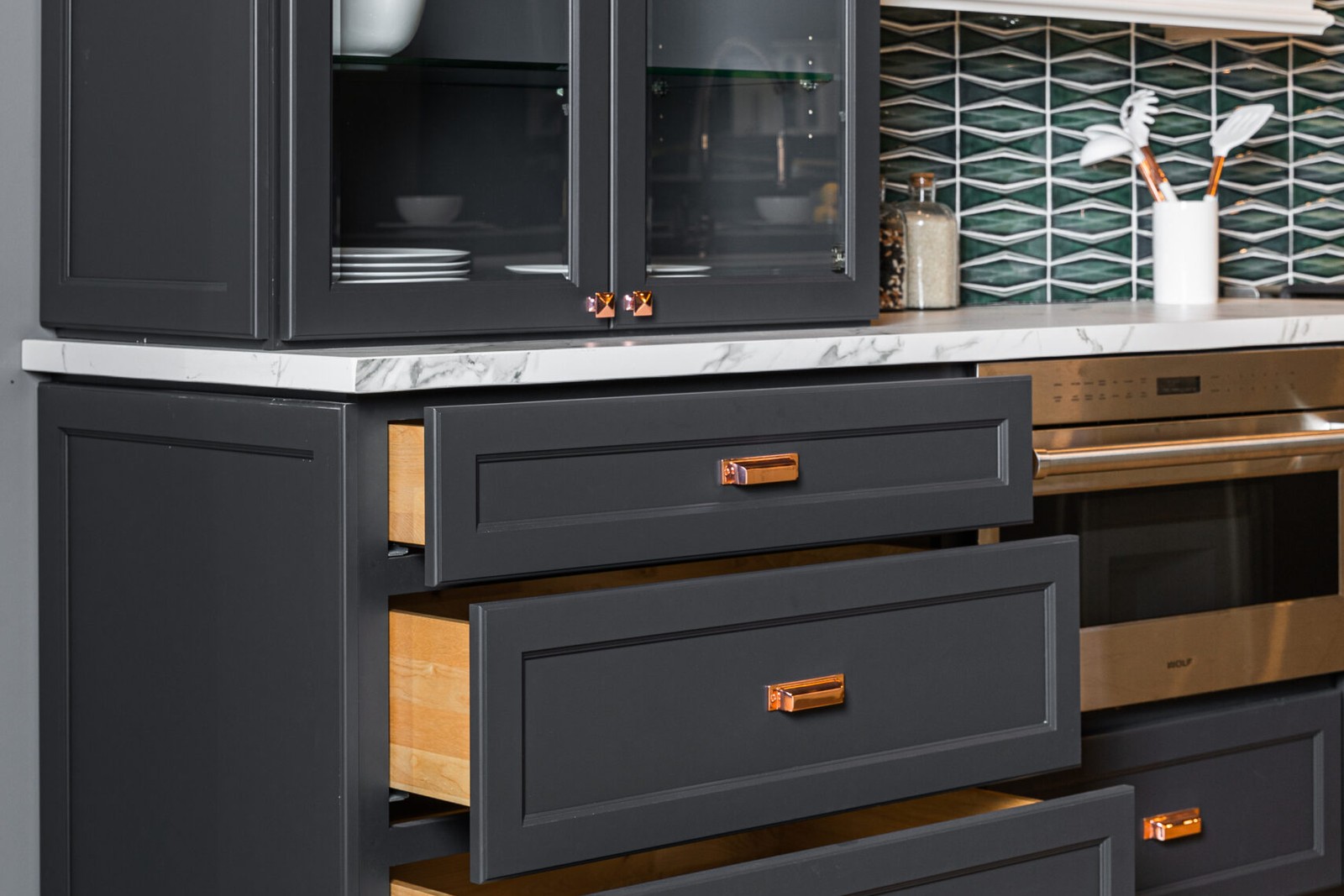
Pull out a drawer so you can see the sides, corners and bottom. Check what each piece is made from, how the bottom is supported and whether the joints fit tightly without gaps.
Dovetail drawer joints have interlocking shapes at the corners. Check how neatly the pieces fit, not just whether the drawer has dovetails. Our transitional kitchen cabinets page lists Charcoal, Chestnut and Dove with solid wood drawers on all sides, full pull-out and dovetail construction. Those are useful features to inspect, but you should still check the rest of the cabinet.
5. Test the drawer slides
To check cabinet drawer slide quality, open and close a drawer slowly. It should move smoothly without sticking, scraping or traveling unevenly. See how far it extends and whether you can reach items at the back. If possible, test a wide drawer similar to one in your planned kitchen.
Ask for the slide brand, model, load rating and any published cycle-test rating. Make sure the information applies to the slides in your quote. An empty drawer may feel smooth but still behave differently when filled with cookware. Don’t add weight to a display without permission.
6. Check the hinges and door movement
Cabinet hinge quality is another hands-on check. Open and close several doors. Watch for rubbing against nearby doors or drawer fronts, and look at how the hinges are fastened. Ask how to adjust the hinges if door gaps become uneven.
If soft-close hardware is included, try it on doors and drawers. A quiet close shows how the mechanism feels, but it doesn’t prove the cabinet box is strong or tell you what’s covered by the warranty. Find out how replacement hinges and slides can be identified and ordered later.
Look Closely at Shelves, Doors and Finish
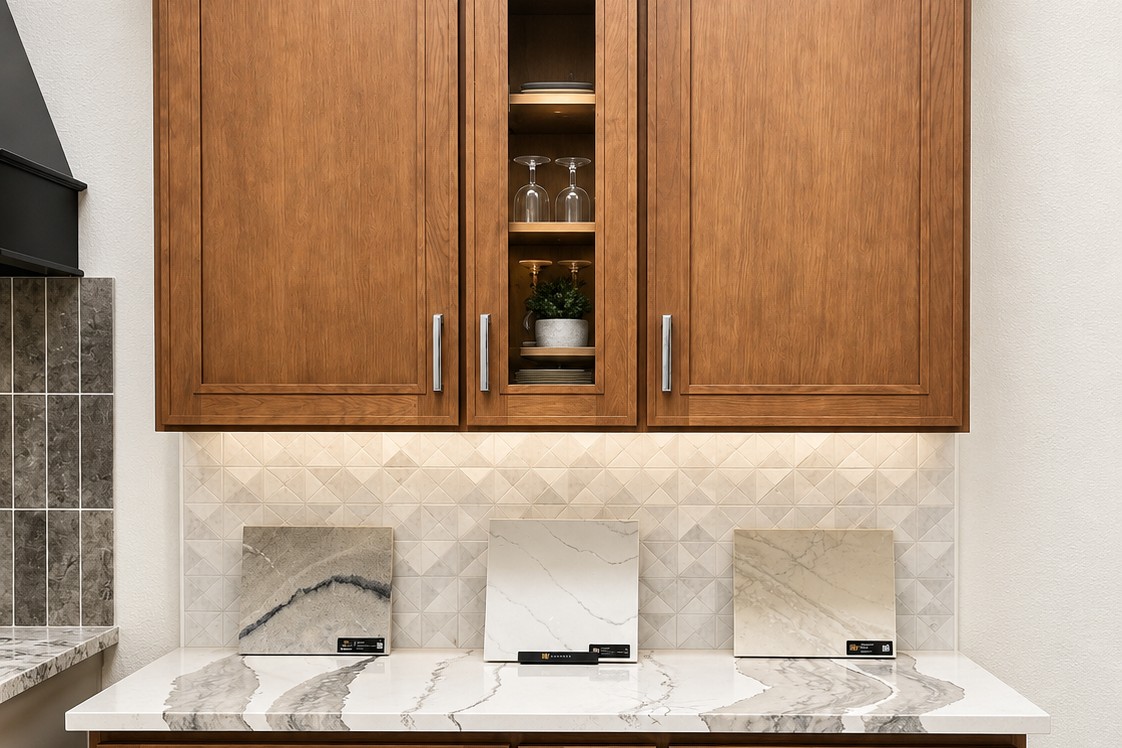
Compare a few samples side by side. Inspect the shelves, doors and finishes, then check the written specifications for details you cannot confirm by looking.
7. Check shelf thickness and support
Ask about cabinet shelf thickness, material, width and supports. Check that each shelf sits securely on its pins or brackets. Find out if the shelves are adjustable and whether the manufacturer lists weight limits or special care instructions.
Compare shelves of similar widths; thickness by itself isn’t the whole story. If you’ll store heavy dishes or small appliances, tell the designer. They can help you check whether the shelf is suitable for that use under the manufacturer’s guidelines.
8. Examine the doors and finish
To check cabinet finish quality, look across the main surfaces, along the door edges and inside any grooves or detailed trim. Watch for chips, peeling, rough spots or uneven coverage. Compare more than one door in the same finish and ask what natural or manufacturing variation is considered normal.
Check what the doors are made from, too. Our transitional cabinet page describes Pure White and Naval as having a solid wood frame and a full-overlay solid wood door. Those details apply to those products, not necessarily to every cabinet style or finish in the showroom.
Request the manufacturer’s care instructions, including which cleaners are safe to use. If you’re still choosing a look, our kitchen cabinet styles guide can help with appearance. For this checklist, focus on the cabinet’s construction and finish.
Read the Warranty and Verify Certifications
The final checkpoint is the paperwork. A showroom visit tells you how a cabinet looks and operates, but not what happens if a part needs repair or replacement.
9. Kitchen Cabinet Warranty: What to Look For
Before you order, request the written warranty for the exact cabinet line. Check how long it lasts, which parts it covers, what it excludes and how to file a claim. Ask whether the finish and hardware have separate coverage and whether labor, removal, shipping or reinstallation are included.
Find out who handles warranty claims and which documents you need to keep. Check any installation and cleaning requirements that could affect coverage. Don’t assume the word ‘lifetime’ answers those questions. Keep the warranty with your itemized quote so you can compare offers accurately.
What does KCMA certification mean?
KCMA certification means a cabinet design has passed performance tests set by the Kitchen Cabinet Manufacturers Association under ANSI/KCMA A161.1. Testing covers the structure, drawers, doors and finish, providing independent evidence of performance beyond what a showroom display can show.
The KCMA A161.1 Quality Cabinet Certification program explains what is tested. If you’re comparing KCMA certified cabinets, request proof for the exact cabinet line. Don’t assume certification applies to everything a store sells, and don’t use it as a substitute for reading the warranty.
Questions to Ask a Cabinet Store
Bring an itemized competing quote if you have one. Ask each store for the cabinet box material, panel dimensions, drawer construction and hardware brands and models. Have them identify which features are included in the quoted price. Asking the same questions at every store makes the quotes easier to compare.
Next, ask to see the exact door style and finish you want. Does the showroom display have the same construction as your order? What changes between cabinet lines? Can you take home the specifications, care instructions and warranty? Write down anything that still needs confirmation.
Finally, ask how installation and follow-up service work. You can read customer reviews to learn about other people’s experiences with San Marcos Kitchens, but use the product documents to verify construction. A positive review cannot replace a specification sheet.
Put the Checklist to the Test at Our San Marcos Showroom
Bring this checklist to our showroom and put our cabinets to the test. Open doors, try drawers and talk through the construction details that matter for your kitchen. Our process includes a free design consultation, in-home measurements and a rendering with pricing so you can plan your project with more confidence.
Visit San Marcos Kitchens at 1355 Grand Ave #107, San Marcos, CA 92078, or call (760) 539-9250. We serve homeowners across North County San Diego. Bring your questions and any cabinet specifications you want to compare and let our team help you explore your options. Ready to get started? Schedule a free design appointment and review your cabinet options at our showroom.
FAQs
What are the signs of quality kitchen cabinets?
The signs of quality kitchen cabinets include tight joints, well-built drawers, smooth slides, securely supported shelves and an even finish. Check the materials, hardware specifications and written warranty for the exact cabinets you’re considering. What you can see and what the documents confirm should agree.
What are the signs of cheap cabinets?
Gaps at the joints, loose hinges, sticking drawers, damaged edges and peeling finishes are warning signs. So are vague product specifications or a warranty that isn’t available in writing. When comparing cheap vs quality cabinets, look at construction and included features instead of judging by price alone.
Are dovetail drawers enough to prove cabinet quality?
No. Dovetails describe the type of joint, not the quality of the whole cabinet. Check the drawer bottom, slides, cabinet box, finish and warranty as well. One well-made-looking detail is not enough to judge the entire product.